Over the years, some of the most popular characters have changed significantly from their original appearances. Many started out as weaker or with different designs, and weren’t initially fan favorites. They only gained widespread popularity after a particular writer began working on them.
Heroes like Daredevil, Captain America, and Emma Frost became truly popular when talented writers started focusing on them. While these characters had promise, they needed someone to help them reach their full potential. Thanks to writers like Frank Miller and Grant Morrison, they’ve evolved from being forgettable figures into the iconic characters fans know and love today.
Steven Grant and Mike Zeck laid the groundwork, but Garth Ennis truly shaped Frank into the dark warning he’s become within the Marvel universe. While Frank’s history existed before, Ennis added the harsh violence that cemented him as Marvel’s ultimate antihero.
Ennis really pushed the boundaries with The Punisher, making it hard to see Frank Castle as a hero. He showed Frank as a ruthless killer, even suggesting he committed atrocities during the Vietnam War, leaving no room for redemption. By pairing him with particularly vile villains, Ennis positioned the Punisher as the slightly less terrible option. This incredibly dark and violent struggle doesn’t have any winners, and that’s a big part of why fans are so drawn to the character and his stories.
Grant Morrison’s run on New X-Men dramatically changed Emma Frost. Previously seen as a minor villain and largely a sex symbol, Morrison leaned into that aspect of her character while also showcasing her intelligence and emotional coldness. He made her a central figure by turning her into a hero and giving her a complicated romantic relationship with Cyclops.
Emma’s evolving personality was also shown through her physical appearance. Morrison presented her ‘diamond form’ as a new ability and a clear sign of her transformation. Interestingly, Morrison hadn’t originally intended to use the character of Frost. He initially wanted to feature Colossus, but when that wasn’t possible, he creatively adapted and came up with a different plan. This unexpected change ultimately cemented the White Queen’s status as a beloved and memorable character.
For years, Captain America stories often felt like symbolic tales. But writer Ed Brubaker brought the character down to earth, weaving in elements of spy thrillers. He explored the gray areas of politics and the resulting scandals, adding complexity to Cap’s world. Brubaker also brought back Bucky, a character from Captain America’s past, to show that Steve Rogers isn’t always flawless.
As a huge Captain America fan, I have to say Brubaker really nailed it with his run. He didn’t try to reinvent the character – so many heroes get messed up when writers try to do that! Instead, he brilliantly explored Cap’s history, adding depth and making him feel relevant to today’s world. It’s like he made Cap timeless, but stayed true to everything that makes the character special. It was just a smart approach, honestly.
The Invisible Woman is often overlooked among Marvel characters. For years, despite being a central figure in the Fantastic Four and providing emotional support to the team, she wasn’t seen as much more than that, possibly because she first appeared alongside a group of male heroes. However, this began to change when John Byrne started writing the series in the 1980s.
Byrne helped Sue transform, becoming stronger both inside and out. He encouraged her to be more confident and taught her to use her powers in new, more powerful ways. This change happened after she confronted her inner darkness as Malice. A final, important step was her name change from Invisible Girl to Invisible Woman, which finally moved away from portraying her as childlike simply because of her gender.
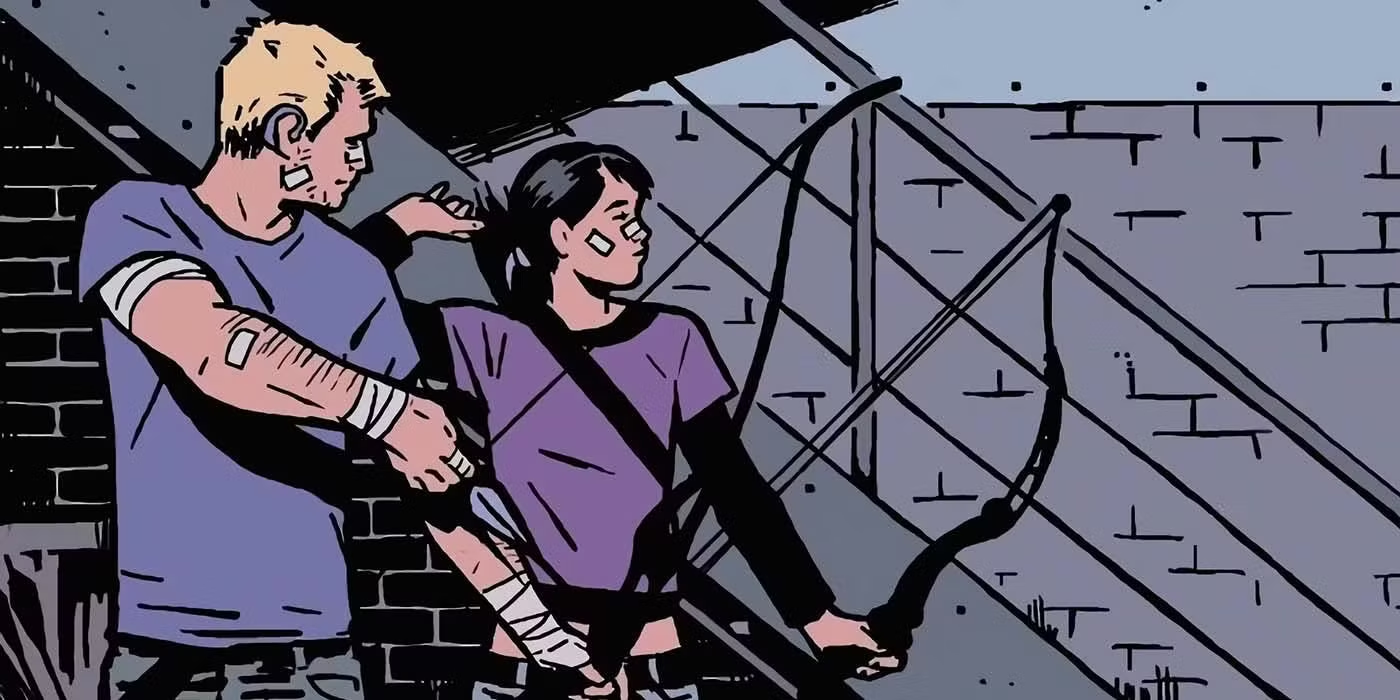
Hawkeye has always felt like an ordinary man with a bow and arrow when surrounded by superheroes and fantastical creatures, which is probably why he hasn’t always been the most popular Avenger. But the character always had potential. In 2012, writer Matt Fraction really highlighted this by portraying Clint Barton as a remarkably normal person. The series shows him dealing with everyday problems – paying rent, chatting with neighbors – even while fighting crime. Plus, he has to put up with the playful teasing of Kate Bishop.
It’s surprising no one explored this grounded, street-level take on Hawkeye sooner, as it feels like a natural fit for the character. This series really cemented Hawkeye’s place in comics, even for fans who had been reading for years. Matt Fraction’s work on Hawkeye was so influential that it heavily inspired the look and storytelling of the Marvel Cinematic Universe’s Hawkeye series.
When Al Ewing began writing The Hulk in 2018, the character was already a comic book legend with a 56-year history. However, Ewing revitalized the Green Giant with his run, The Immortal Hulk. He reimagined the origins of gamma-powered beings, turning them into something akin to a metaphysical horror story. This allowed him to give the Hulk genuine immortality, exploring the idea that the Hulk’s many different forms are actually manifestations of a complex identity disorder.
The entire series was thoughtfully crafted around Bruce Banner’s emotional wounds, functioning primarily as an in-depth exploration of his character. While Daniel Ewing led the creative process, he built upon foundations laid by Bill Mantlo and Peter David, who originally developed much of the Hulk’s backstory. Ewing skillfully combined the best aspects of their work and transformed it into a fresh, revitalized take on the character, offering something new after years of familiar storylines.
Wolverine didn’t start as a major character in Marvel comics – he actually first appeared in a Hulk story. However, writer Chris Claremont dramatically changed that. He developed Logan into the beloved hero he is today by giving him a rich and complex emotional life. This was a big shift from the character’s original portrayal as a simply rage-filled fighter. By adding a strong sense of responsibility and a dry wit, Claremont created a truly compelling character.
The conflict between Wolverine’s heroic side and his savage nature is central to his character. Writer Chris Claremont highlighted this internal battle, revealing Logan’s past and sense of duty. It was during this time, with Claremont writing the character, that Wolverine evolved into the complex and tragic figure he is today.
Carol Danvers first appeared as Captain Marvel in comic books in 2012, specifically in issue #9 of Avenging Spider-Man, written by Kelly Sue DeConnick. While she had been known as Ms. Marvel for 44 years prior, this name change revitalized the character, and DeConnick continued this transformation through two subsequent solo series.
When DeConnick took over the writing, Carol Danvers got a fresh look and really came into her own as a leader. While her powers remained the same, she now exudes a confidence she lacked as Ms. Marvel. More importantly, she’s regained control over her own story, which had been gradually eroded. Thankfully, she’s been spared the deeply sexist plotlines that now represent a low point for Marvel. And because of the Marvel Cinematic Universe, this empowered version of Carol is the one most people now know, which is fantastic.
Though Stan Lee and Jack Kirby initially used Norse mythology as a starting point for the Thor comics, Walt Simonson truly explored its depths. He made a key change by removing Thor’s secret human identity, meaning Thor was always present in the stories. This allowed Simonson to focus more on the world of Asgard, its history, and even create epic storylines taking place far away from Earth, such as the Surtur Saga.
Simonson further developed the idea of worthiness, demonstrating it wasn’t unique to Thor by introducing Beta Ray Bill, another hero who proved himself deserving. This concept of worthiness became central to Thor’s identity as both a superhero and the protector of Earth, showcasing his good intentions and noble character.
When Daredevil first appeared in comics in the 1960s, he wasn’t the complex hero fans know today. It took about 20 years, and the work of writer Frank Miller, to transform him into the brooding, tormented vigilante he became. Miller infused the character with the gritty atmosphere of crime novels, explored Matt Murdock’s faith, and introduced the Punisher as a foil to Daredevil’s strong sense of right and wrong.
Readers really embraced the new direction. Frank Miller revitalized Daredevil, rescuing the character from being forgotten—sales had been declining for quite a while, and it’s possible Marvel would have discontinued the series otherwise. Miller’s version of Daredevil is so well-known that it’s the one adapted for television and film. Both the Netflix series Daredevil and the upcoming MCU show Daredevil: Born Again heavily draw inspiration from this influential period of the character’s history.
Read More
- United Airlines can now kick passengers off flights and ban them for not using headphones
- Crimson Desert: Disconnected Truth Puzzle Guide
- All 9 Coalition Heroes In Invincible Season 4 & Their Powers
- How to Get to the Undercoast in Esoteric Ebb
- Warframe Voruna Prime access begins on April 8 for all platforms, new deluxe cosmetic Warframe skins revealed
- All Golden Ball Locations in Yakuza Kiwami 3 & Dark Ties
- Dakota County’s plan to end hunger involves locking mayors in escape rooms
- Grey’s Anatomy Season 23 Confirmed for 2026-2027 Broadcast Season
- All Itzaland Animal Locations in Infinity Nikki
- Katanire’s Yae Miko Cosplay: Genshin Impact Masterpiece
2026-02-21 20:11